Stronger in CirclesExperteninterviewCircularity
What It Takes to Scale Circular Outdoor Retail – A Conversation with Eloy Padilla
Veröffentlicht am 29. Juli 20264 min Lesezeit
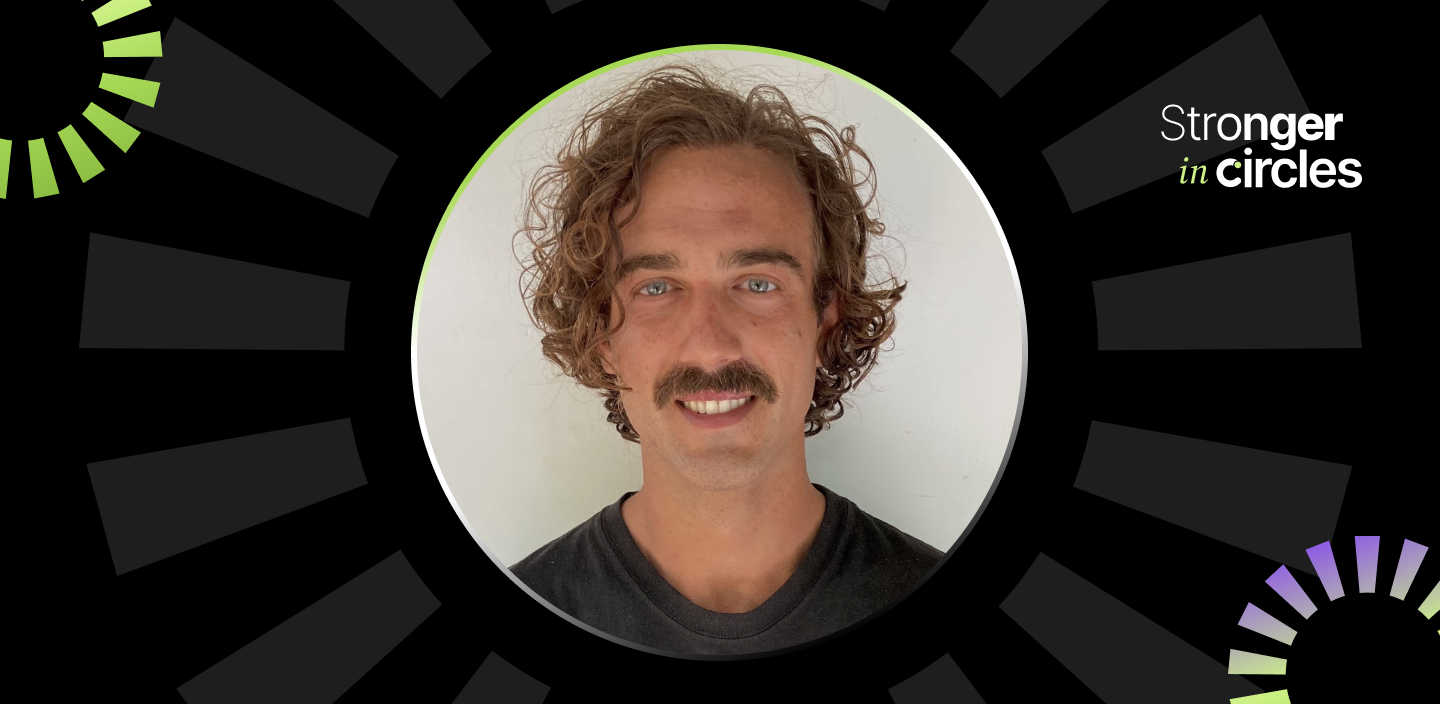
Eloy Padilla, Co-Founder of Outzip
The outdoor industry depends on nature. Yet for decades, its business models have largely remained linear.
With #StrongerInCircles, we speak with founders, industry experts and practitioners who share their experiences and perspectives on advancing circularity across different industries.
For this interview, we spoke with Eloy Padilla, Co-Founder of Outzip.
Eloy shares how his journey from sustainable commerce to circular retail led him to focus on rental infrastructure for the outdoor industry. We also discuss the opportunities and challenges of rental, reuse and repair, the role of digital infrastructure, and why he believes enabling circular business models requires a different way of thinking.
Eloy, how did you first become interested in the circular economy, and what made you believe it could reshape the outdoor industry?
I became more interested in the circular economy back in 2016, when I started a project for a magazine focused on sustainable and natural design with an interior and graphic designer. For the magazine, I thought we could reach out also to sustainable brands for the typical display sale and finance the magazine. As I started to research, I only found one bold brand, Patagonia. I have surfed since I was a kid (among many other outdoor sports like climbing, mountaineering, or snowboarding), and the fact that they were developing the first wetsuit without neoprene but with natural cellulose was something that sparked more curiosity about what outdoor brands are doing to bring back to what, indeed, provides us everything, including our passion for sport and adventure, nature.
I was indeed on a surf road trip; I was crossing from North California to South Baja California in Mexico. So I met a real inner conflict: why, in order to enjoy nature, do I need to harm it by consuming the gear and clothing I need for it? So I started to research deeper and map the whole market. A couple of years later, I launched a blog site covering a curation of sustainable brands and products, but most important for me was the information processed for consumers. I developed a database of sustainable-oriented certificates and materials, talking about how they are made, who is behind them, why they matter, who verifies them. I thought, if only consumers could make better decisions, brands would shift. And that happened: a huge green wave hit the market, and people were still confused about what to believe or not, brands thinking about what matters for consumers, what is real value, and what is just green claims… this issue still exists today. A couple of years later, the blog site became a curated D2C marketplace, and I started to sell those products. I believed that D2C models had the potential to decrease overproduction, overstock, and transport. However, that wasn't enough to close loops. I launched a second-hand marketplace, and my idea was to launch a rental site too, so the marketplace could close a complete product loop, while maximizing product value.
That startup did not work out after a few years. I was alone in a tough market and with a lack of resources. That is how I jumped into Outzip and started to work on the rentals and operational side of circular retailing.
How would you define Outzip? Is it a rental platform, a marketplace, a software provider, or all of the above?
It is indeed all of the above. One of the biggest pain points we discovered by researching and monitoring the market with a circular approach was telling us exactly what is failing and missing to build scalable circular retailing. On one side, a marketplace that pushes rentals as it exists in other industries (car sharing, tool rentals, house rental), on the other side, operational expertise and efficiency were eating up the profits. Too many stakeholders, overpriced tools that only solve one fraction of the puzzle, lack of outdoor products expertise, all that becomes a bottleneck. Many brands rushed to the green wave, but almost none put enough thought and structuring to scale it. The reason is quite simple: they live out of sales, not rentals. Still, they want to tap into it at just the marketing cost, not from restructuring.
Outzip is the infrastructure for outdoor equipment rental. We provide access to the marketplace, also for local rental shops, but also we offer a full set of digital tooling to control the lifecycles, refurbishments, repairs, etc…all fully integrated, no overcoats, no data leaks. This digital solution combined with experts in our ecosystem and our own expertise allows us to offer end-to-end circular solutions for brands and retailers at one single touch point, reducing costs and increasing efficiency and profits.
What is holding the outdoor industry back from embracing circular approaches such as rental and reuse?
Clearly, the whole industry (like most industries) is designed to be linear. Fast revenues, projectable sales, and the rush for new collections are holding this industry back. Of course there is fear of the unknown and the tendency toward the safest. The market is still operating like 20 years ago, and the rental market is in the meantime underserved. On one side is also the lack of digitalization that holds small to medium companies back. But overall, they are hooked on linear sales and skeptical about the new generation of service-oriented businesses. That is indeed the opportunity for us to build the solutions for them, work, and benefit together.
What needs to happen for renting, reusing, and repairing to become the standard way we access outdoor gear?
We strongly believe in one simple fact: the market does not lack rental offer or demand; it lacks the infrastructure to make it profitable and scalable. It needs the structural backbone but also needs a new face that brings all that access to consumers. Before Airbnb, you could rent a house; before Booking.com, you could rent a hotel. They did not invent it, they built the access infrastructure. My grandfather had a bike rental shop in the 60s; your grandfather also reused milk bottles; our parents went to the repair shop or asked a neighbor to sew a broken pant or put a patch… Unfortunately, our human condition is always to forget, and an aggressive capitalistic and global economy pushed all this back for the sake of extraction. We want to bring circularity back.
We aim to live and operate around what matters to us the most, nature, the outdoors.
Thank you, Eloy, for your time, your openness and the thoughtful insights into your work at Outzip – and into the opportunities and challenges of building circular business models in the outdoor industry.
Das könnte Dir auch gefallen