ExperteninterviewStrongerInCirclesCircularity
Why Circular Tech Must Create Demand – A Conversation with Joost de Kluijver
Veröffentlicht am 23. Feb. 20265 min Lesezeit
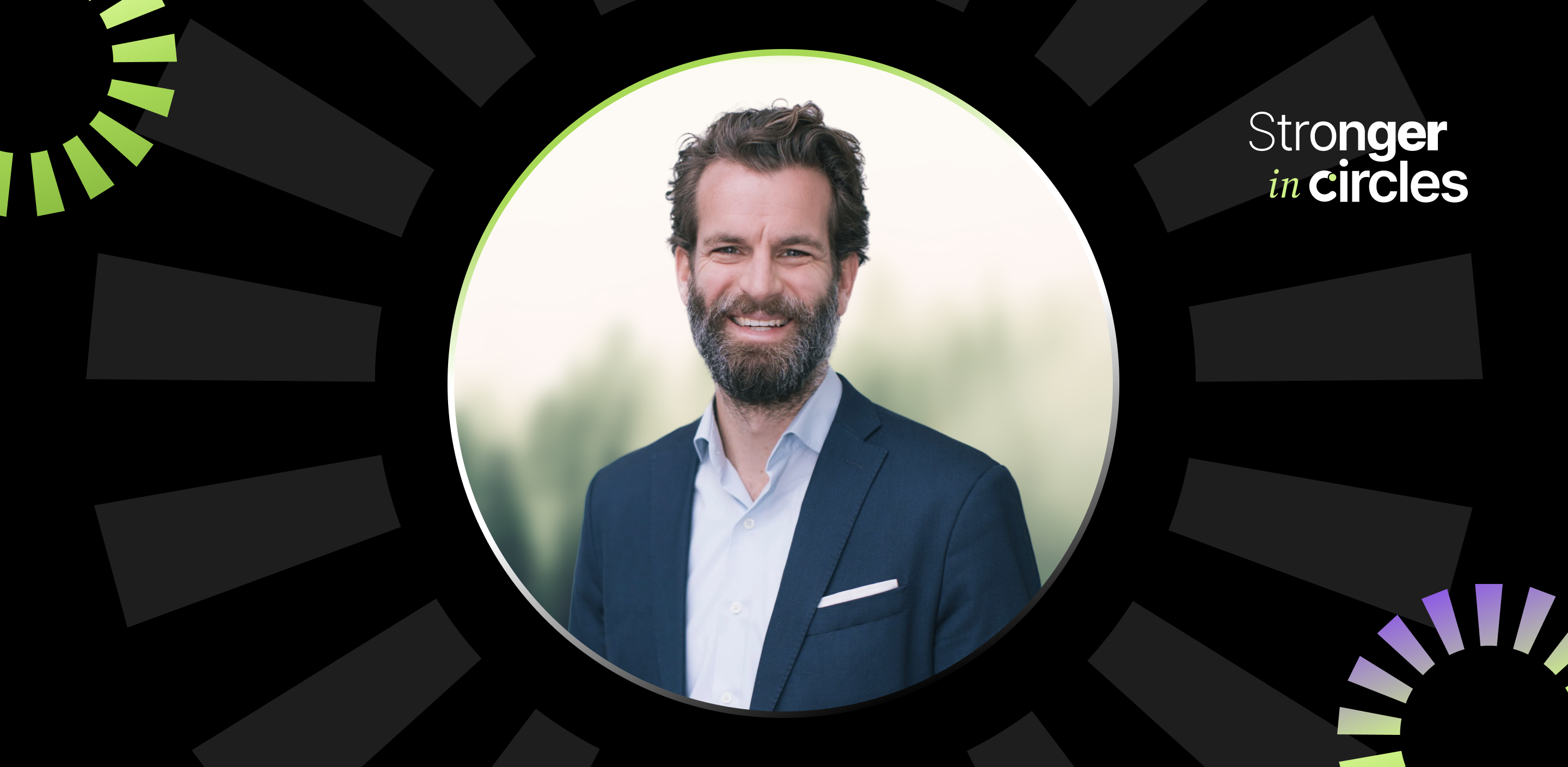
An Interview with Joost de Kluijver, CEO of Closing the Loop
With our series #StrongerInCircles, we speak with people who actively shape circularity — founders, makers, researchers, and industry leaders — and who turn ideas into action: through practical solutions, new perspectives, and real progress in the circular economy.
In this edition, we speak with Joost de Kluijver, CEO of Closing the Loop. Founded in 2012, the company helps brands match device sales with the collection of end-of-life electronics through its One for One model.
In the interview, Joost shares his perspective on what has held circular tech back, why the way we communicate “green” matters, and what it will take for circular consumption to become attractive beyond a niche audience.
Joost, when you started Closing the Loop in 2012, the circular economy in electronics was still largely unknown. What drove you back then, and how did your vision shape the first steps of the company?
"Circular thinking has always been around, also in tech; electronics have been reused and repaired since they were sold. The label ‘circularity’ is a bit recent and that’s not always a helpful thing. In essence, creating (closed) loops is purely rational, logical; why would you want to create waste, have inefficiency and create scarcity if you can prevent it? In the last 15 years working on waste reduction, I’ve seen the topic being treated as a niche - borderline irrelevant – partly because this logic was labeled as innovation or, quite problematic, as ‘green innovation’.
To me, the topic has always been a business actualization of how I was raised: not be wasteful, clean up after yourself, try to make things better. I must say I’m sometimes surprised to see my great industry choosing to treat circular thinking as annoying or disconnected from business. I see it as one of the most positive, customer-centric, and easy ways to improve value and a license to operate. And especially due to my work in countries that have leapfrogged into the 21th century due to (mobile) technology, for example in Africa, I’m extremely proud of the progress my industry has created and very keen to expand it, in my way."
Your “One for One” model sounds simple at first – one new device for each collected old device. How does the process actually work, and what challenges do you encounter in making it truly impactful?
"One for One is simple. Period. It means that when a company sells you a new device, it matches that sale with the recycling of an end-of-life device (or: one device added to the market leads to one device removed from the market). The end-customer does not have to do anything as the company simply adds the service to the sale, like you would add an insurance. My company does the actual collection on the back-end, so the company that sells the new device does not have to do anything themselves either.
For those that are interested to know more, we can make this simple story a lot richer. That’s because we collect the waste in the global South. Since ’12, we’ve worked with mostly the informal waste sector in countries like Ghana and Uganda to create large scale electronic waste collection programs (>8MM devices collected so far). This means our supply chain is full of beautiful stories of people creating safe jobs by turning waste into gold. Combine that with the fact that we mostly collect the most iconic product of technological advancement, mobile phones, and you can imagine our service is not just used for green reasons, but very much also for storytelling, customer engagement, marketing and branding - and quite simply for sales.
Our service is used as a unique selling point by by companies that make or sell hardware. Which has two benefits, for companies like Vodafone and Samsung. The service delivers commercial value and it allows tech brands and their customers to turn their positive stance to waste reduction into immediate and understandable results: a first step towards true circular consumption (and in my view, the huge lack of attractive first steps is a main cause why so many customers are not on board yet).
I mostly see our approach as truly impactful as we’ve basically created a financing mechanism for historic e-waste collection in countries that lack waste management infrastructure (and there’s a lot of historical waste – as well as that type of countries). We’re now reaching the scale that One for One will fund Africa’s first facility that can turn electronic waste into metals. Next to that, I’m very excited to see One for One serving as an entry point into ‘circularity for tech’. The service is no final solution by any means, but I’m seeing the service’s customer engagement and tangible results boosting the positivity and frankly the legitimacy of the (often a bit abstract) circular roadmap/strategy of our customers."
Looking back on Closing the Loop’s journey, which moments or achievements make you particularly proud, and how do you see the circular economy developing over the next ten years?
"I’m very excited by the diverse and extremely skilled group of people working at Closing the Loop. They keep improving what my co-founder and I wanted to create when we introduced One for One: truly combining business value with positive impact. What makes me proud is that we’re going beyond ‘selling a green service to green people/brands’.
Even though I love to work with likeminded sustainability professionals on African impact and ambitious plans and projects for global waste reduction, I am a lot more proud of our collaborations with folks working on customer experience, branding, sales, MarCom and finance. I see it as our main goal to improve the appeal and relevance of ‘closed loop tech consumption’ as the topic is unfortunately currently interesting to just 5-25% (depending on your market) of customers. I find it extremely motivating to create success - or even just interest - outside our bubble. But that does mean that we have to change the way we talk about green and move it away from the negative lenses of compliance, legislation and responsibility that dominated the topic in the last 15 years. Excitingly, the best work we’ve done combined the best of two worlds: the commercial world that is unparalleled in its customer-centricity, engagement, storytelling and creative innovation and the circular world that leads to results everyone benefits from."
circulee and Closing the Loop share similar goals in the circular economy. Which insights or principles from your work would you pass on to other companies like circulee that are also driving sustainable IT solutions?
"Learn as much as you can from the commercial (often linear) world and apply those lessons and best practices to your business. I often see circular innovators battling the market - or the incumbents. Although that delivers a great ‘hero feeling’ and might sounds like the right thing to do, it is also highly likely you will lose or at least keep you small. I like to look at the market not as bad, but as indifferent or dumb. Which for me means that the market (capitalism or what name you want to give it) can also be used to create positive results. I just believe that the way to go about is not to inform/educate everyone of the problems, risks etc that we are facing if we do not change our behavior (or change society). I think we need to do it the same way as the commercial guys engage with their customers. Meaning: seduce consumers, build the coolest brands and stories, deliver on actual consumer needs (however simplistic they sometimes may be, such as “I want to be cooler than my neighbor”). Being rational, or offering the most efficient and easiest to use propositions is not going to cut it. We have to become masters of the market and create demand."
Thank you, Joost, for your time, your openness, and for the work you’ve been driving since 2012 to turn circularity into real, measurable impact.
Das könnte Dir auch gefallen